Whale Season In The Whitsundays: When To See Humpback Whales
Humpback whales come to the Whitsundays every winter to mate, give birth and raise their calves. When to come, where they show up, how you might see one on a tour, and the distance rules every boat must follow.



When Is Whale Season In The Whitsundays?
Humpback whale season in the Whitsundays runs from about June to September. The best time is late July through August and into early September. The whales migrate north from Antarctic waters each winter, and the sheltered waters between the islands are an important calving ground.
| Fact | Detail |
|---|---|
| Season | About June to September |
| Best time | Late July, August and early September |
| Species | Humpback whales |
| Why they come | To mate, give birth and raise their calves in warm, sheltered water |
| Where | The Whitsunday Passage, but they turn up almost anywhere |
| Distance rule | Boats stay 300 m away in the Whitsundays Whale Protection Area |
Whale Season Month By Month
| Month | What to expect |
|---|---|
| May | Occasional early arrivals |
| June | The first whales of the season arrive |
| July | Numbers build. Late July is when the best viewing starts. |
| August | Peak season |
| Early September | Still a great time to see them |
| Late September | Whales head south. Sightings taper off. |
The first whales of the 2025 season were seen on 6 June, between Pentecost Island and Surprise Rock. Timing shifts a little each year.
When And Where To Look
Pick your dates for the peak, then keep your eyes on the water on any boat trip.
The best time is late July through August and early September. The Whitsunday Passage is a good place to see them, but just about anywhere in the Whitsundays is the same.
If you are on your own boat: within 500 metres of a whale, slow right down so there is negligible wake, and at 300 metres turn the engine off.
Where To See Whales
Most of the waters around the Whitsunday Islands are a whale protection area, set up to give whales room to rest, socialise and give birth in the sheltered bays between the islands. You can see them from boats crossing the Whitsunday Passage, from the islands, and from the air.
| Where | Notes |
|---|---|
| Whitsunday Passage | Between the mainland and the islands, crossed by most day tours |
| Around the islands | Whales use the sheltered bays to rest and calve |
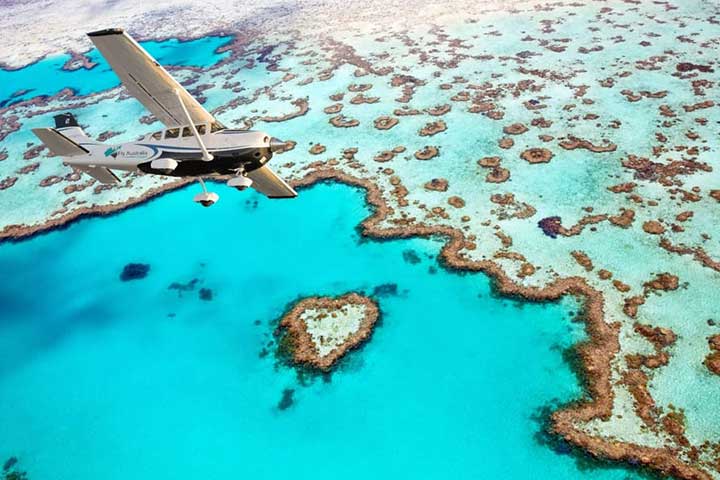
| From the air | Keep an eye out on a scenic flight. Sightings are never guaranteed. |
Seeing Whales On A Tour
Inside the Whitsundays Whale Protection Area, whale watching as part of a tourist program is not allowed, so there are no dedicated whale watching cruises from Airlie Beach. Instead, whales are a bonus on the way to somewhere else: you will often spot them from day tours, sailing trips and scenic flights in season, from the legal distance.
| Option | Why it works in whale season |
|---|---|
| Day tours | Most cross the Whitsunday Passage, where whales are often seen |
| Overnight sailing | More hours on the water and quiet anchorages |
| Scenic flights | A view from above, at the height limits set for whales |
No tour can promise a whale. Winter is also the dry season, with mild days and cooler nights, so pack a jacket.
Day tour or overnight?What to packWhale Distance Rules In The Whitsundays
These rules apply to every boat, jet ski, plane, drone and helicopter in the Great Barrier Reef Marine Park. The Whitsundays has extra protection because most of its waters are a Whale Protection Area.
| Who | Rule |
|---|---|
| Boats in the Whale Protection Area | Stay at least 300 m from a whale. Keep to negligible wake within 500 m. |
| Boats elsewhere in the Marine Park | Stay at least 100 m from a whale |
| Any boat, near a calf | Stay at least 300 m away, anywhere in the Marine Park |
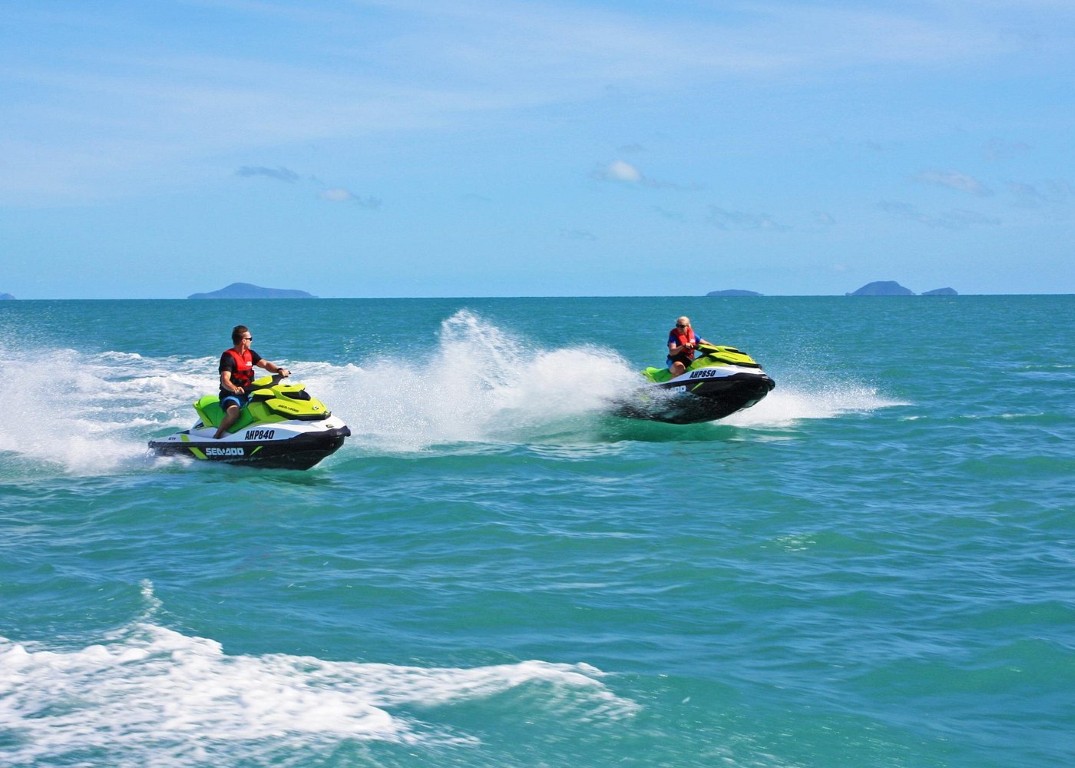
| Jet skis | Stay at least 300 m away |
| Planes and drones | Not below 1,000 ft within 300 m of a whale |
| Helicopters, Marine Park | Not below 1,650 ft within 500 m of a whale |
| Helicopters, Whitsundays | Not below 2,000 ft or within 1,000 m of a whale |
| Tourism | Whale watching as part of a tourist program is prohibited in the Whale Protection Area |
A "vessel" includes anything that can carry a person on the water, such as windsurfers and surfboards. If you accidentally hit a whale, you must report it.
Source: Great Barrier Reef Marine Park Authority whale and dolphin rules. Check the zoning map for the Whale Protection Area boundary.
Whale Season FAQ
When is whale season in the Whitsundays?
About June to September. The best time is late July, August and early September.
Where can you see whales in the Whitsundays?
The Whitsunday Passage is a good place to see them, but they turn up almost anywhere around the islands in season. You can also spot them from scenic flights.
Are there whale watching tours from Airlie Beach?
Not dedicated ones. Whale watching as part of a tourist program is prohibited in the Whitsundays Whale Protection Area, so whales are seen as a bonus on day tours, sailing trips and scenic flights.
How close can boats get to whales in the Whitsundays?
No closer than 300 metres in the Whale Protection Area, which covers most of the Whitsundays, with negligible wake within 500 metres. Elsewhere in the Marine Park the limit is 100 metres, and 300 metres from any calf.
Why do whales come to the Whitsundays?
Humpback whales migrate north from Antarctic waters in winter to mate, give birth and raise their calves in the warm, sheltered waters between the islands.
Can you fly a drone near whales?
Not below 1,000 feet within 300 metres of a whale anywhere in the Marine Park.
More Whitsundays Information
Sources
Great Barrier Reef Marine Park Authority (whale and dolphin rules, Whale Protection Area, calving season). Whales of the Whitsundays (first sightings of the 2025 season, negligible wake within 500 m). Checked November 2026. Local knowledge from Nath J.
Explore More Of The Whitsundays