Whitsundays Snorkeling Information
Whitsundays snorkelling takes place on the fringing coral reefs around the islands and on the outer Great Barrier Reef, all reached by boat from Airlie Beach. Sites, conditions, marine life and tours for visitors.
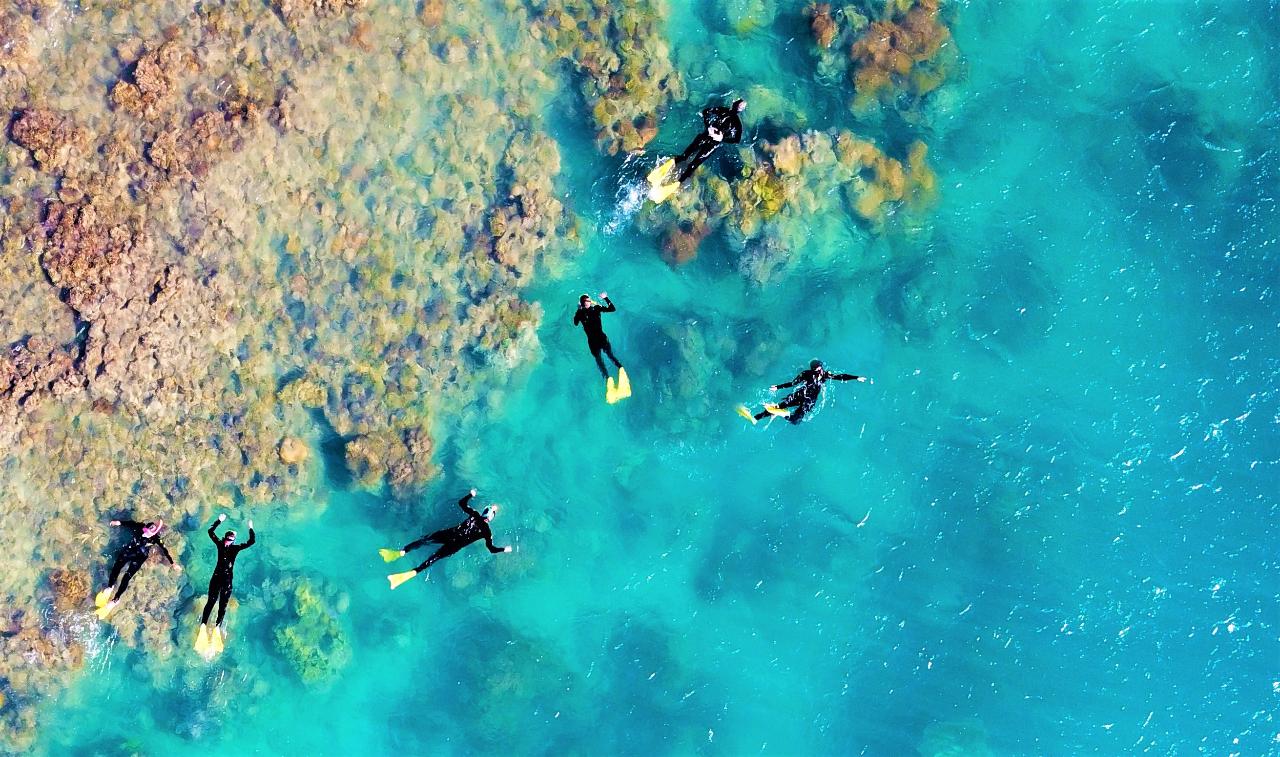
The Best Ways To Snorkel The Islands
The coral is around the islands and on the outer reef, not off the mainland beaches. Every option below starts with a boat.
| Option | Detail |
|---|---|
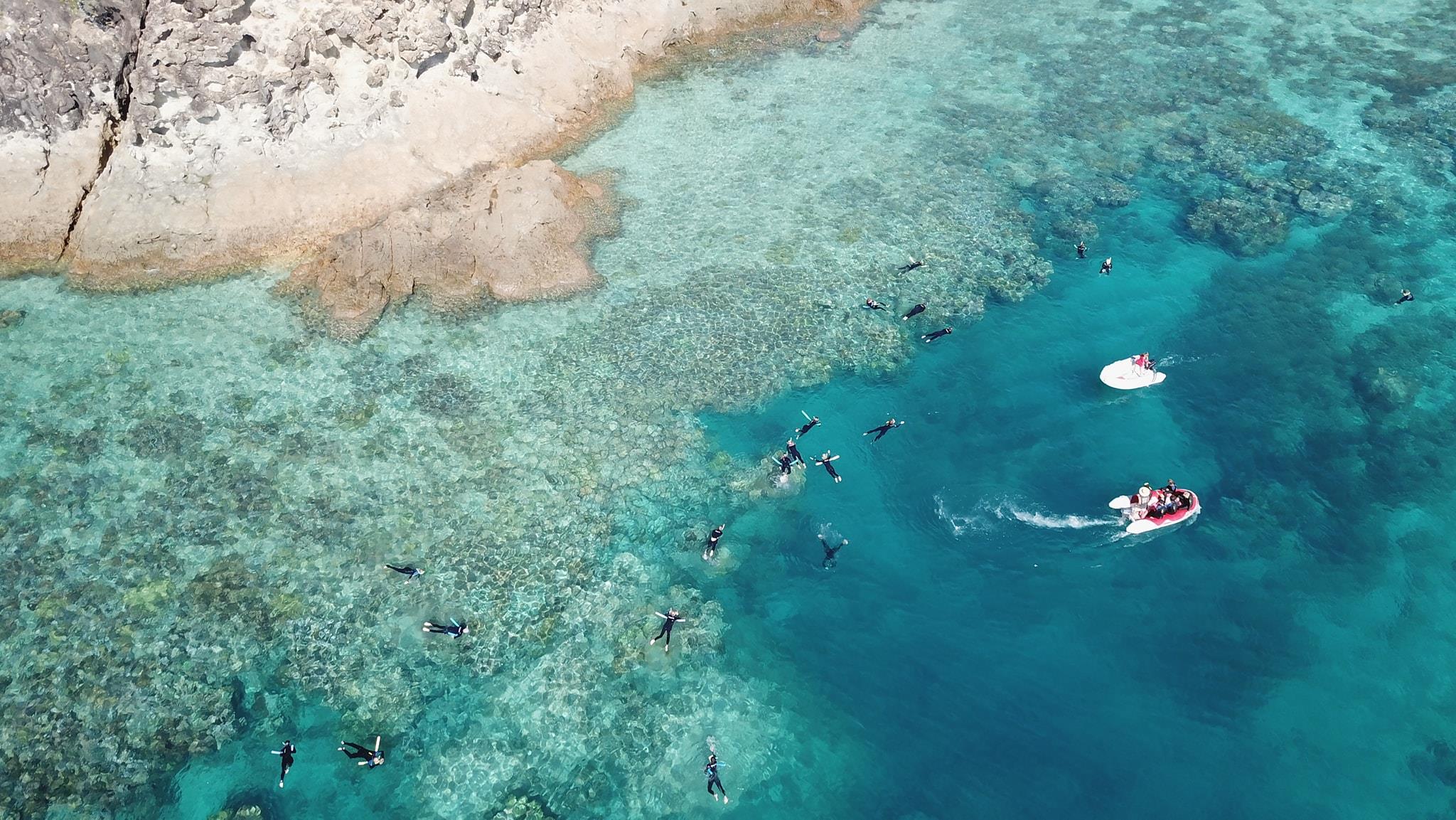
| Day tour | One or two snorkel locations, usually combined with Whitehaven Beach and Hill Inlet Lookout. Typically 45 to 60 minutes in the water at each site. Whitsundays day tours |
| Overnight sailing tour | Two or three snorkel locations plus Whitehaven Beach, over 1 to 3 nights. Overnight tours |
| Outer Great Barrier Reef day trip | About 3 hours each way to the Reefworld pontoon at Hardy Reef, with up to 4 hours at the reef. Outer Great Barrier Reef tour |
| Dedicated snorkel and sail day | About 3 hours at Langford Island and Langford Reef. Snorkelling and sailing tour |
| Boat hire | Power boats by the day, or bareboat yacht charters over several days. Boat hire from Airlie Beach |
| Own boat | Boat ramps at Coral Sea Marina, Port of Airlie, VMR Whitsunday and Shute Harbour. Use the public moorings at reef sites. |
| From an island resort | Hamilton, Hayman and Daydream islands run their own snorkel trips. Island resorts |
| Without getting wet | Glass-bottom boat tours, the semi-submersible and the underwater observatory at Reefworld. Glass bottom boat tour |
Whitsundays Snorkel Locations
The site used on the day depends on tide and wind. Skippers choose the bay with the best shelter and clarity.
| Location | Where | What is there |
|---|---|---|
| Manta Ray Bay | Hook Island, north-east | Maori wrasse, fusiliers, trevally and batfish. Manta rays in the cooler months. Two underwater sculptures. |
| Luncheon Bay | Hook Island, north | Shallow coral gardens. A deeper canyon for divers. |
| Maureens Cove | Hook Island, north | Large coral bommies and coral gardens. |
| Butterfly Bay | Hook Island, north | Sheltered from southerly winds. Butterflyfish and coral trout. |
| The Pinnacles | Hook Island, north-east | Hard coral pinnacles. Currents can be strong. |
| Saba Bay | Hook Island, east | Fringing reef with public moorings. |
| Caves Cove | Hook Island | Fringing reef with public moorings. |
| Blue Pearl Bay | Hayman Island, north-west | 3 to 18 m deep. Resident Maori wrasse and the Maori Wrasse sculpture. No-anchoring area. |
| Langford Reef | Langford Island | A long sand spit exposed at low tide. Turtles. Two underwater sculptures. |
| Bali Hai | Black Island | Small island beside Langford Reef with public moorings. |
| Cateran Bay | Border Island | Sheltered bay on the northern side. Fewer boats. |
| Chalkies Beach | Haslewood Island, east end | Opposite Whitehaven Beach. Fringing reef off a white sand beach. |
| White Bay | Haslewood Island | Fringing reef. |
| Armit Island | North-west of Airlie Beach | Green Zone, so no fishing or collecting. |
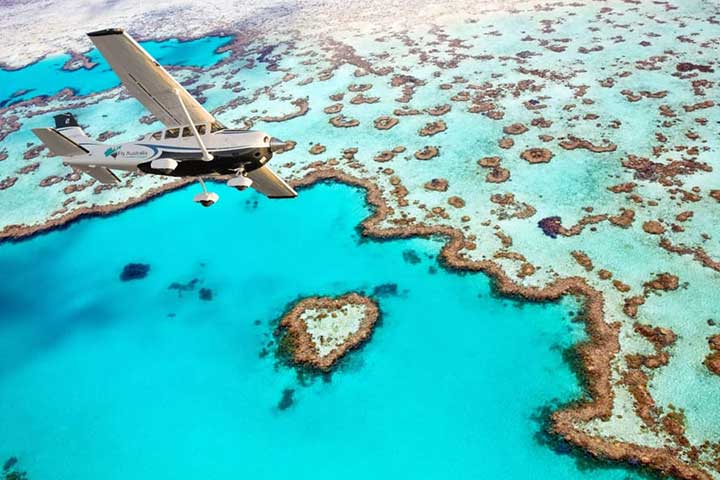
| Hardy Reef | Outer Great Barrier Reef | 39 nautical miles offshore. Reefworld pontoon, coral wall, giant clams. Heart Reef is nearby. |
| Bait Reef | Outer Great Barrier Reef | Coral gardens, reef sharks and turtles. No-anchoring area. |
Snorkelling Conditions
| Factor | Detail |
|---|---|
| Tides | The tidal range is about 1.3 m on neap tides and up to 4 m on spring tides. A big high tide puts more water between the surface and the coral. A very low tide can make some reefs too shallow to swim over. |
| Wind | The prevailing wind is from the south-east. Many of the best bays face north and are sheltered from it. Northerly winds, mostly in summer, bring swell into those bays and rule out many sites. |
| Best conditions | Light southerly winds give calm, clear water |
| Visibility | 3 to 15 m at Blue Pearl Bay (Tourism Whitsundays). Rain and strong wind reduce it. |
| Stinger season | November to May |
| Manta rays | Most often seen in the cooler months, May to September |
| Humpback whales | June to September |
Sea temperature
| Months | Sea temperature |
|---|---|
| December to March | 28 to 29°C |
| April and May | 25 to 27°C |
| June to August | 21 to 24°C |
| September to November | 23 to 27°C |
Average sea surface temperatures at Hamilton Island.
Whitsundays weather by monthWhat You Will See Underwater
Well known for Whitehaven Beach and Hill Inlet Lookout, the Whitsunday Islands also sit inside the Great Barrier Reef Marine Park, which has more than 1,500 species of fish and six of the world's seven marine turtle species.
| Marine life | Detail |
|---|---|
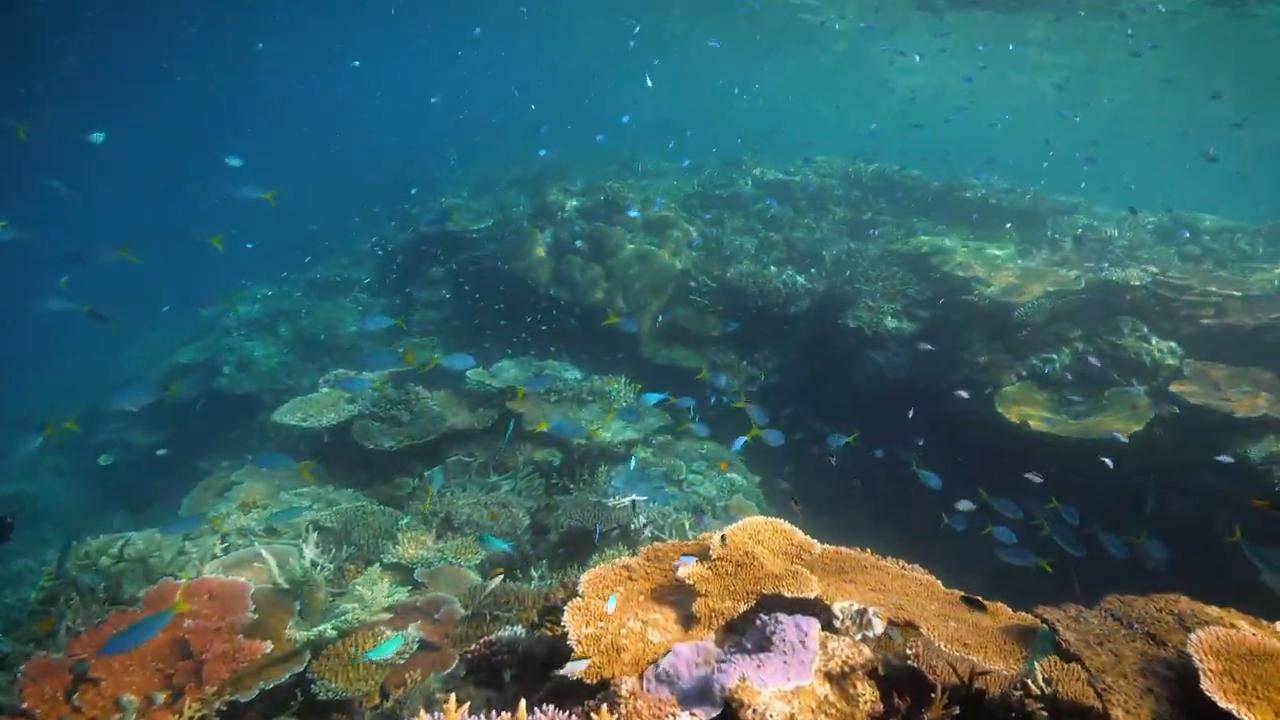
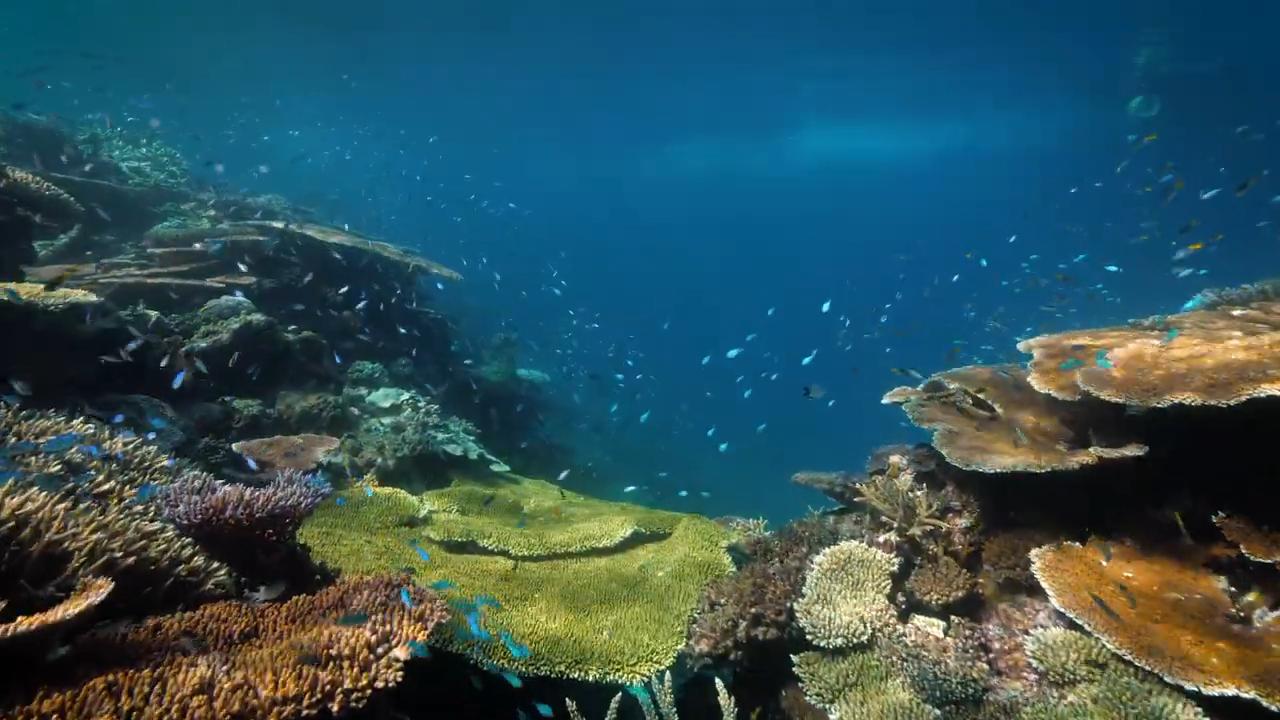
| Coral | Soft coral gardens on the fringing reefs. In some bays the coral runs right up to the beach; others have deeper rock walls covered in hard coral. |
| Maori wrasse | The largest of the wrasses. Resident fish at Manta Ray Bay and Blue Pearl Bay. |
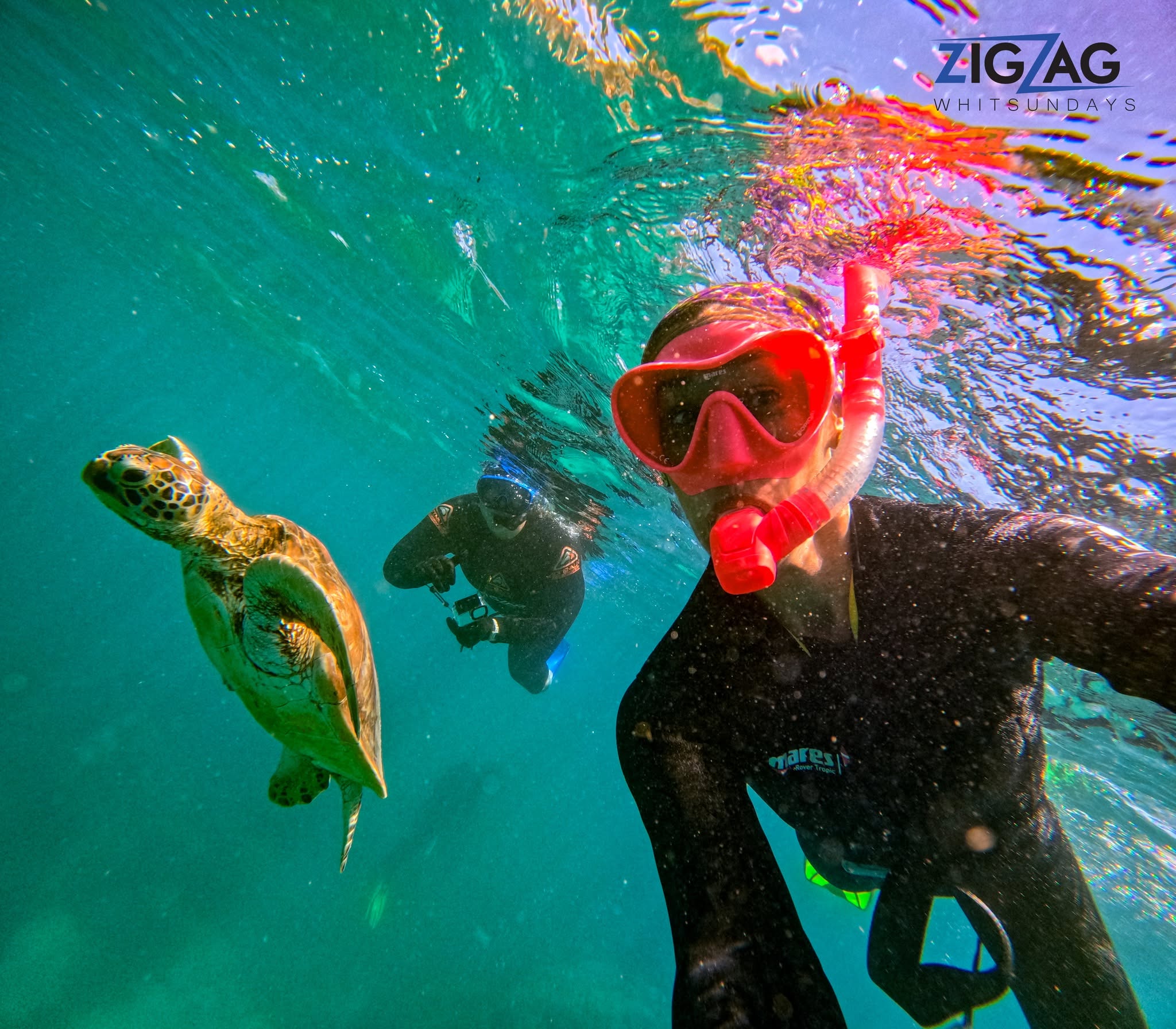
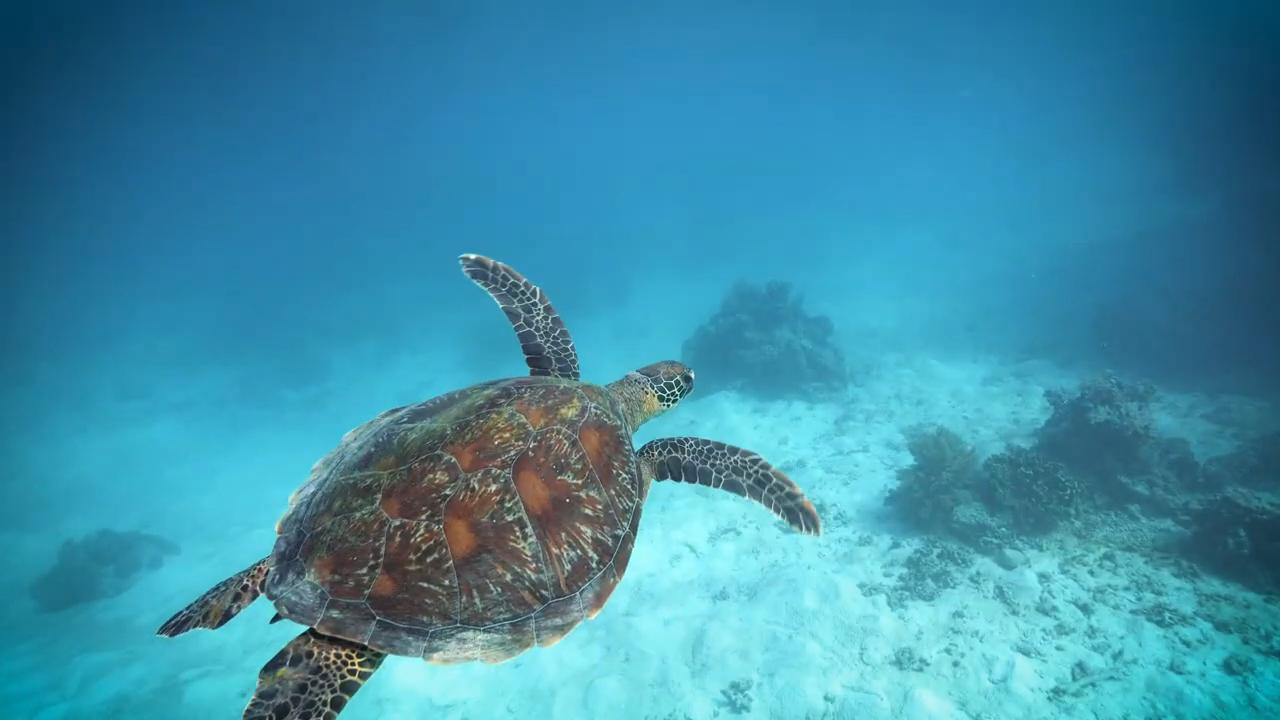
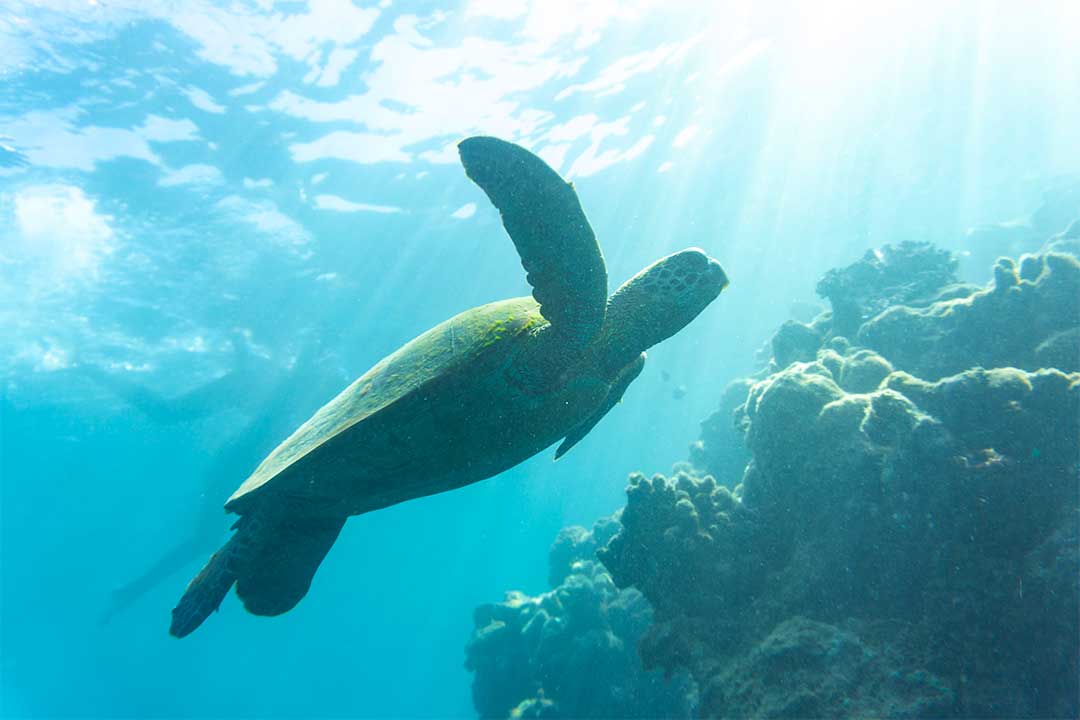
| Turtles | Green turtles are the most often seen, especially at Langford Reef |
| Manta rays | Plankton feeders. Seen around northern Hook Island in the cooler months. |
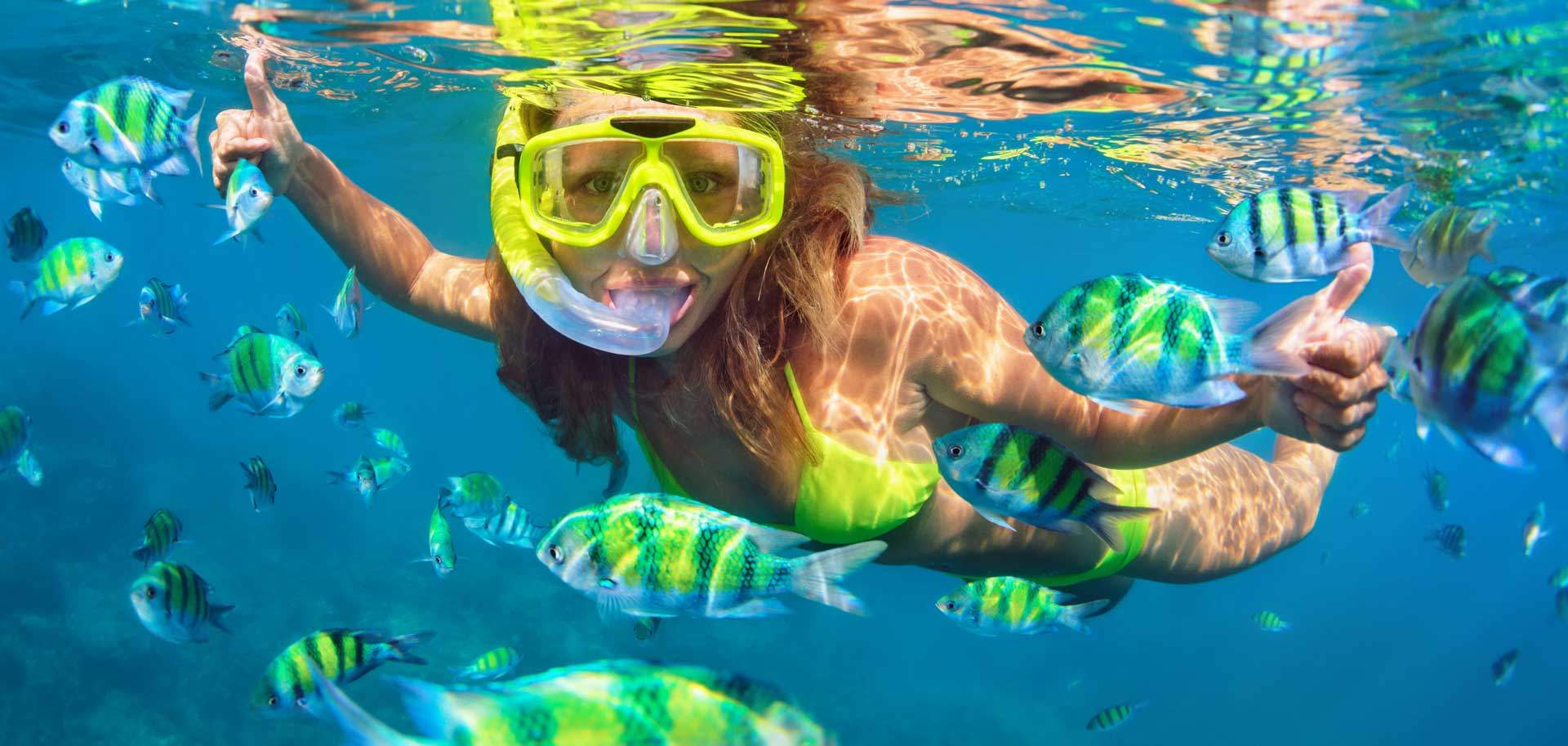
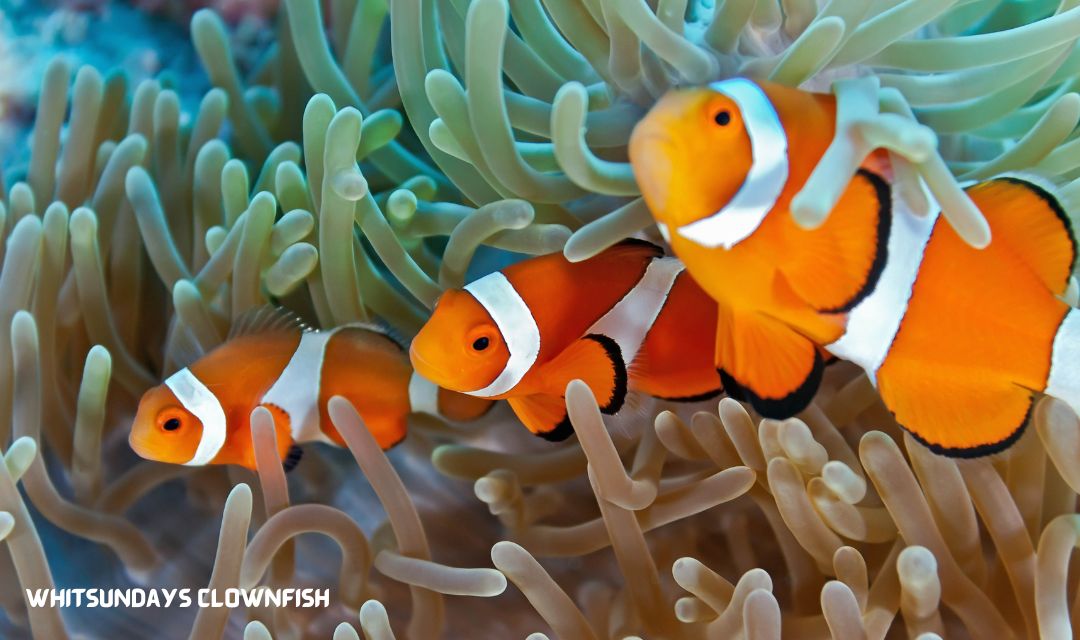
| Reef fish | Clownfish, parrotfish, butterflyfish, angelfish, damselfish, fusiliers, batfish, trevally and coral trout |
| On the reef | Giant clams, sea cucumbers and Christmas tree worms |
| Sharks and rays | Small reef sharks, and stingrays over sand |
| Dugongs | Shy and rarely seen by snorkellers. Recorded in Tongue Bay, Cid Harbour and Repulse Bay. |
| Reef condition | Cyclone Debbie damaged many Whitsunday fringing reefs in March 2017. A James Cook University study of 43 sites found coral cover still well below pre-cyclone levels six years later, with recovery continuing. Condition varies from bay to bay. |
Ngaro Underwater Marine Sculpture Trail
Six sculptures were installed from 2019 after Cyclone Debbie. They sit in shallow water at snorkel sites and give new coral a base to grow on.
| Sculpture | Location | Detail |
|---|---|---|
| Maori Wrasse | Blue Pearl Bay, Hayman Island | 3.85 m long, by Adriaan Vanderlugt |
| Manta Ray | Manta Ray Bay, Hook Island | 3.8 m wide, in about 5 m of water, by Adriaan Vanderlugt |
| Migration of the Mantas | Manta Ray Bay, Hook Island | By Brian Robinson |
| Turtle Dream | Langford Reef | 6 m long, by Col Henry |
| Anthozoa | Langford Reef | A coral polyp |
| Bywa | Horseshoe Bay, Bowen | A reef creation story. On the mainland, north of Airlie Beach. |
Whitsundays Snorkelling Tours
| Tour | From | Snorkelling | What it includes |
|---|---|---|---|
| Whitsundays Snorkelling And Sailing Tour | From $219 | Langford Reef | About 3 hours at Langford Island. Sailing catamaran, lunch, sunset sail home. Ages 12 and over. |
| Ocean Rafting | From $249 | 2 sites | Fast boat. Two snorkel sites plus Whitehaven Beach and Hill Inlet Lookout. |
| Thundercat Whitsundays | From $250 | 2 sites | Fast boat. Two snorkel sites, North Whitehaven Beach, Hill Inlet Lookout, lunch. |
| Fury Whitsundays | From $240 | 1 site | Fast boat. Hill Inlet Lookout, North and South Whitehaven Beach. |
| Camira Sailing Tour | From $259 | 1 site | Sailing catamaran. Hill Inlet Lookout, Whitehaven Beach, lunch. |
| ZigZag Whitsundays Day Tour | From $239 | 1 site | South Whitehaven Beach and lookout, with a snorkel stop. |
| Spirit Of Whitsundays, GSL Marine | From $159 | Optional | Four ticket options on one boat. Snorkelling is on selected options. |
| Outer Great Barrier Reef Tour | From $329 | Hardy Reef | Up to 4 hours at the Reefworld pontoon. Snorkel gear, semi-submersible, underwater observatory, lunch. Guided snorkel tours and dives cost extra. |
| Glass Bottom Boat Tour | From $99 | No swimming | 70 minute reef viewing tour with marine guides. |
Prices per adult in Australian dollars. Snorkel gear is included on every snorkelling tour listed.
What To Take Snorkelling
| Item | Detail |
|---|---|
| Mask, snorkel and fins | Supplied by tours |
| Stinger suit | Supplied or hired on most tours. Check before booking, as some tours do not include one. |
| Flotation | Flotation vests or noodles are carried on tour boats. Ask for one if not a confident swimmer. |
| Sun protection | Reef-safe sunscreen, hat and a long-sleeved shirt. A stinger suit also blocks the sun. |
| Towel and dry clothes | Fast boats are open and windy on the way home |
| Underwater camera | Optional. Some tours sell photo packages. |
| Seasickness tablets | Take before departure if prone to motion sickness |
Safety And Rules
| Topic | Detail |
|---|---|
| Marine stingers | Stinger season is November to May, though stings can happen in any month. Irukandji and box jellyfish are both found in the region. A full-body lycra suit is the best protection. |
| If stung | Leave the water, call Triple Zero (000) and pour vinegar on the sting. Irukandji symptoms can take 5 to 45 minutes to appear. |
| Sharks | Do not swim at dawn or dusk, in murky water, or where people are fishing or cleaning fish. Do not swim in Cid Harbour, where warning signs are in place. |
| Crocodiles | Queensland Parks warns that estuarine crocodiles live in the waters around the Whitsundays |
| Snorkel with a buddy | Stay within the area the crew sets and inside the lookout's view |
| Medical conditions | Tell the crew about any heart, lung or other medical condition before entering the water |
| Coral | Do not touch, stand on or kick the coral. It is fragile and contact can kill it. |
| Fish and turtles | Watch from a distance. Do not chase, touch or feed marine life. |
| Collecting | Taking shells, coral or marine creatures is illegal in protected areas |
| Anchoring | Never anchor on coral. No-anchoring areas are marked by white pyramid buoys with a blue label. Public moorings are blue double-cone buoys. |
| Lifeguards | None at any island snorkel site |
Sources: Queensland Government, Whitsunday Regional Council, Great Barrier Reef Marine Park Authority.
Whitsundays Snorkeling Video
Whitsundays Snorkelling Questions
Which Whitsunday island is best for snorkelling?
Hook Island has the most snorkel sites. Manta Ray Bay, Luncheon Bay, Maureens Cove, Butterfly Bay and The Pinnacles are all on its northern side, which is sheltered from the south-east wind. Blue Pearl Bay on Hayman Island and Langford Reef are close by.
Is it possible to snorkel at Whitehaven Beach?
People swim at Whitehaven Beach, but there is no coral reef off the sand, so it is not a snorkelling site. Tours that visit Whitehaven Beach snorkel at a separate reef on the same day. The nearest reef is at Chalkies Beach on Haslewood Island, opposite Whitehaven.
Can you snorkel from the beach at Airlie Beach?
Not over coral. The fringing reefs are around the islands and are reached by boat. Airlie Beach Lagoon on the foreshore is a free swimming lagoon with no reef.
Do you need a stinger suit in the Whitsundays?
A full-body stinger suit is recommended from November to May, when Irukandji and box jellyfish are most common. Stings can happen outside those months, and many snorkellers wear a suit all year for sun protection.
When is the best time to snorkel in the Whitsundays?
Snorkelling runs all year. June to September has no peak stinger risk, humpback whales and the best chance of manta rays, with sea temperatures of 21 to 24°C. December to March has the warmest water at 28 to 29°C but falls in stinger season and the wet season.
Is the snorkelling better at the islands or the outer reef?
The island fringing reefs are 1 to 2 hours from Airlie Beach and fit into a day that also visits Whitehaven Beach. The outer reef at Hardy Reef is about 3 hours each way and has a coral wall, larger fish and a pontoon with an underwater observatory.
Can non-swimmers snorkel in the Whitsundays?
Yes, on most tours. Crews supply flotation devices and give a briefing before anyone enters the water. Glass-bottom boat and semi-submersible tours show the reef without swimming.
How much does snorkelling in the Whitsundays cost?
A dedicated snorkel and sail day is from $219 per adult. Fast boat tours that combine snorkelling with Whitehaven Beach are from $240, or from $249 with two snorkel sites. The outer Great Barrier Reef day trip is from $329. Snorkel gear is included.
More Whitsundays Information
Sources
Queensland Parks and Wildlife Service. Great Barrier Reef Marine Park Authority. Queensland Government. Whitsunday Regional Council. Tourism Whitsundays. Tourism and Events Queensland. James Cook University, April 2026. PADI. Wikipedia and its cited sources. Checked October 2026.